
"Do what we can and trust the Lord"
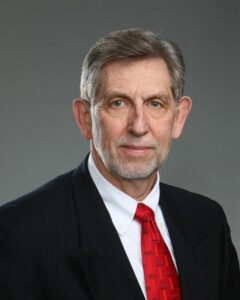
By the time Dr. Walter Grubb arrived in 1987, Harrison-Chilhowee Baptist Academy had already lived through more than most schools could bear.
The academy had celebrated its first 100 years in 1980. That centennial year should have felt like a launching point. There was a campaign called Century Two, an effort to raise money, improve facilities, and prepare the school for the years ahead.
But looking back, Dr. Grubb remembers the campaign differently. A lot of energy went into it. Materials were prepared. Multimedia equipment was purchased. Presentations were taken to churches across the state.
Financially, though, it did not do what the school hoped it would do.
Still, the school had reached something remarkable. One hundred years of continuous service. One hundred years of students, teachers, dormitories, classrooms, chapel services, meals, prayers, hard seasons, and answered prayers. That alone mattered.
Then came the tragedy.
Hubert Smothers, who was serving as president of the school, died in a fire in the president’s home on campus on New Year’s in 1985.
For a school family, that kind of loss does not stay on paper. It does not live only in board minutes or historical summaries. It hits hallways. It hits offices. It hits students, staff, alumni, and trustees who are trying to understand how to move forward.
“That just rocked the academy,” Dr. Grubb said.
Jane Shubert Ellison, who was serving as board chair at the time, stepped in to help keep the school moving. The Board of Trustees began searching for the next president, and eventually turned to Dr. William Palmer, a well-known pastor and educator.
Dr. Palmer had served as pastor of First Baptist Church in Morristown. He had also served as president of the Tennessee Baptist Convention. He knew Baptist life in Tennessee, and Tennessee Baptists knew him.
Dr. Grubb remembers him as brilliant. Not casually smart. Brilliant.
He heard Dr. Palmer preach many times, in chapel and in churches they visited together. What stood out was not just his delivery. It was the way he handled Scripture. Dr. Grubb does not remember him opening a Bible to read the passage before preaching. Dr. Palmer had already memorized it.
Every time, he quoted the text from memory.
When Dr. Palmer became president, he focused much of his attention on relationships, public relations, donors, and the Tennessee Baptist Convention. For a time, he tried to lead without a principal underneath him. Harrison Chilhowee was not a simple operation. It had academics, boarding life, finances, facilities, athletics, international students, churches, alumni, and the constant pressure that comes with being a small Christian school.
By the summer of 1987, Dr. Palmer needed help.
That is when he called Dr. Grubb in California.
Dr. Grubb was on his way to work when the phone rang. The two men had a long conversation. Dr. Palmer invited him to come to Tennessee for an interview, and Dr. Grubb agreed. He flew east, met with Dr. Palmer on a Sunday afternoon, and left that meeting with a strong conviction that the Holy Spirit was leading him and his family to move.
So he came.
But to understand what he stepped into, you have to understand the school’s relationship with the Tennessee Baptist Convention.
The academy had been part of the Tennessee Baptist Convention family since 1932, when the school was rechartered as Harrison Chilhowee Baptist Academy. The relationship worked in two main ways. The convention elected the school’s Board of Trustees, and the school received Cooperative Program funding.
In 1987, the Tennessee Baptist Convention related to four educational institutions in this way: Union University in West Tennessee, Carson-Newman College in East Tennessee, Belmont College, and Harrison Chilhowee Academy.
The difference was obvious.
The others were colleges. Harrison Chilhowee was a boarding and day school serving secondary students. Dr. Grubb described it as “the little kid on the block.”
The school was also struggling.
Enrollment was low. In one year, he remembers opening school with only 79 students on the first day. At the same time, the academy was receiving several hundred thousand dollars from the convention’s Cooperative Program.
That created pressure. Some of the pressure was understandable. If the school was receiving that much financial support, convention leaders wanted to see growth. Dr. Grubb understood that concern. He shared it.
But the pressure did not stay theoretical.
By 1992, Dr. Palmer was preparing for retirement, and the relationship with the convention was growing more strained. Some leaders, especially from Middle and West Tennessee, began pushing to reduce the academy’s funding.
At the Tennessee Baptist Convention annual meeting in Gatlinburg in November 1992, a motion came forward to cut the school’s funding by 35 percent.
The timing made it worse.
The meeting took place in November. If the motion passed, the reduction would take effect immediately, right in the middle of the school year.
It passed.
The school left that convention facing a financial crisis.
Dr. Palmer recommended that the board bring in a consulting firm to help the school think through what appeared to many people to be the beginning of the end of its relationship with the convention. The firm, led by Dr. Bruce Lockerbie and connected with The Stony Brook School in Long Island, New York, made several major recommendations.
One recommendation was a name change.
Harrison Chilhowee Baptist Academy had a strong Baptist identity, but the consultants believed the school needed broader appeal. The name they suggested was The King’s Academy of Greater Knoxville.
That name would eventually become part of the school’s future.
Another recommendation involved leadership. With Dr. Palmer planning to retire, one of the consultants, Mike Bean from Dallas, Texas, was recommended as his successor.
In December 1992, Mike Bean was named president. He took office in January 1993. The school, still legally Harrison Chilhowee Baptist Academy, began doing business as The King’s Academy.
Dr. Grubb continued serving as principal.
The next season was not easy.
The relationship with Tennessee Baptist leadership continued to worsen. There were tensions in the fall of 1993 and into the spring of 1994. By January, Dr. Grubb believed he could see where things were headed, so he submitted his resignation, effective at the end of the 1993-1994 school year.
Then in March 1994, Mike Bean and the board agreed to part ways.
Suddenly, the school was again in transition.
The board came to Dr. Grubb and asked if he would serve as interim president while they regrouped and considered the future of the school.
He agreed.
It was, in his words, “a bit of a hornet’s nest.”
One of the first issues on his desk involved athletics.
Harrison Chilhowee had an extensive athletic program and was a member of the Tennessee Secondary School Athletic Association. During the 1993 football season, decisions had been made that led the TSSAA to determine that the school had intentionally played ineligible players. The result was severe. The school received what Dr. Grubb called the “death penalty.”
That meant the school would no longer be eligible for postseason playoffs in football. Basketball was affected too.
And that particular year, the basketball team had reason to believe something special might happen.
A student from Wales named Todd Stone had come to the school. He was around 6-foot-5, over 200 pounds, and, according to Dr. Grubb, a ferocious basketball player. He could dunk easily and shoot the three.
Todd liked the school and called a friend from Wales, Lee Walker. Lee came to campus too. Dr. Grubb remembers him as one of the best high school basketball players he had ever seen.
Then came Stuart Robbins, another player from Wales, who stood around 6-foot-10.
All three had played together before. Now they were together at Harrison Chilhowee.
Then the penalty hit.
For athletes, especially seniors, that kind of news is devastating. The team could play, but there would be no postseason run. No playoff games. No chance at a state title.
So one of Dr. Grubb’s first major jobs as interim president was to repair the relationship with the TSSAA.
With legal support, he prepared an extensive appeal to the TSSAA Board of Control. Around the first of May 1994, he presented the appeal.
The school was partially reinstated.
There were still penalties and conditions. The situation did not vanish overnight. But the school was restored enough to begin rebuilding the relationship.
A month later, the board asked Dr. Grubb to consider taking the role permanently.
He prayed about it.
Then he said yes.
In June 1994, Dr. Walter Grubb officially became president of the school.
Looking back, he does not romanticize those years. He calls them painful. The school had lost Hubert Smothers. It had leaned on Dr. Palmer’s steady leadership. It had faced declining enrollment, financial pressure, a major funding cut, a name change, a strained denominational relationship, a short presidential tenure, athletic penalties, and another leadership transition.
At meetings with Tennessee Baptist leadership, Dr. Grubb often felt the coldness in the room. Once, he asked the chair of the Education Committee if there was anything the school could do differently to improve the relationship.
The answer stayed with him.
“Well, actually, I see no purpose for Christian schools.”
Dr. Grubb was stunned.
The man supported Christian higher education, but he had nothing good to say about Christian elementary or secondary education. Dr. Grubb remembers wondering why he was even serving on that committee.
That moment told him something. The road ahead was not going to be easy.
He knew enrollment was low. He knew finances were fragile. He knew leadership turnover had hurt the school. He knew the relationship with the convention was strained. And if he was honest, he did not have a great deal of confidence that he could fix it.
But he believed he was supposed to be there.
“I felt the Holy Spirit telling me, yes, do this,” he said.
So he stayed.
Not because the future looked clear. It did not.
Not because the finances were strong. They were not.
Not because he knew exactly how to solve every problem in front of him. He did not.
He stayed because God had made the next step clear enough.
His posture was simple.
“I’m here. Let’s play. Let’s do what we can and trust the Lord for the rest.”
That sentence says a lot about the story of The King’s Academy.
There were plans, yes. There were meetings, appeals, board decisions, financial conversations, and leadership changes. All of that mattered.
But underneath it all was something deeper.
Do what we can.
Trust the Lord.
And take the next step.