Dr. Carroll
Gideon Bull
Honoring a pioneering physician, medical researcher, and World War I veteran whose groundbreaking work in bacteriology, immunology, and antitoxin development helped advance medical treatment and save lives.
A Pioneer in Medicine, Research & Service
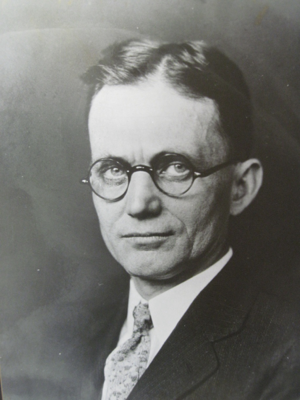
Carroll Gideon Bull was the fourth of eleven children of William G. and Emma White Bull, born in June 1884. His obituary in the June 2, 1931, New York Times states that he was born in Knoxville, and records suggest his family lived on a Dumplin Valley farm on the Jefferson/Sevier County line. Complete documentation is lacking, but it is believed that he graduated in 1900 from Chilhowee Institute (later to become Harrison Chilhowee Baptist Academy and then The King’s Academy). It is known that he enrolled in Carson-Newman College in either the spring of 1901 or 1902. He subsequently attended Peabody College in Nashville, now part of Vanderbilt University, earning the B.S. degree in 1907. He initiated medical training at the University of Nashville and earned the M.D. from Lincoln Memorial University in Knoxville in 1910.
He taught bacteriology and pathology at Lincoln Memorial University and conducted postdoctoral work at the University of Michigan, Harvard University, and as a Nelson Morris Institute Fellow at the University of Chicago. In 1913, he joined the Rockefeller Institute for Medical Research in New York City as Assistant (later Associate) Professor of Pathology from 1915 to 1918.
In 1917, he enlisted as a major in the U.S. Army Medical Corps. Dr. Bull made an intensive study of gas gangrene bacillus, one of the most deadly infections of trench warfare. Gangrene developed when bullets carrying bits of infected clothing entered the body and often required amputation or caused death. The antitoxin he discovered was at that time regarded as the most important accomplishment in war work made by the Rockefeller Institute. The Proceedings of the United States Naval Institute, Volume 43, 1917, stated that the serum Dr. Bull developed “was the Institute’s most important accomplishment in war work” and directed it to be administered to Allied soldiers as soon as possible. Dr. Bull traveled to England and France to be nearer to the troops being treated. In appreciation for his work, France awarded him the “Silver Medaille de Reconnaisance Francaise” (“Medal of French Gratitude”).
Dr. Bull returned from the war to Johns Hopkins University in Baltimore, Maryland, where he served as Professor of Immunology at the School of Hygiene and Public Health. At Johns Hopkins, Dr. Bull conducted additional research into the sources of the common cold, fermentation, immunity, septicemias in rabbits, agglutination of bacteria in vivo, and antitoxins. He played significant roles in advancing treatments for diphtheria, malaria, and pneumonia.
He was a member of the American Association of Pathologists and Bacteriologists, the Society of American Bacteriologists, the Society of Experimental Biology and Medicine, the American Public Health Association, and the Chicago Pathological Society.
Dr. Bull died at age 47 on May 31, 1931. He was married to Zelma Smith of Atlanta, Georgia. They had two daughters.